About Thickness Gauge
The thickness of a substance, such as metal, wood, plastic, glass, or other materials, can be measured using a thickness gauge. It is employed to gauge a material's thickness in order to ascertain its size and shape, for the purpose of comparison, or for quality control. The sort of thickness gauge to use depends depend on the material being measured. Thickness gauge is available in different shapes and sizes. The thickness of materials is measured using both analogue and digital gauges.
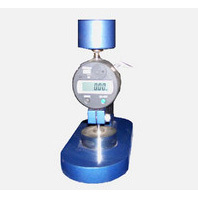
Advanced Digital Control and DisplayEquipped with a backlit digital LCD display and digital zero reset, this gauge ensures precise readings with effortless visibility, even in low-light conditions. The digital control guarantees highly accurate, repeatable measurements, adhering to stringent ISO, ASTM, and DIN standards for thickness assessment.
Robust Construction & Versatile ApplicationThe thickness gauge combines an aluminium body with stainless steel components, offering both durability and long service life. Designed for laboratory and industrial use, it measures materials such as paper, films, sheets, rubber, plastic, textile, and more, accommodating specimen customization with interchangeable anvils.
Efficient Operation and User-Friendly FeaturesWith automatic operation, intuitive controls, and portable bench-top mounting, this gauge supports high accuracy (0.001 mm) with quick, instantaneous results. It integrates optional USB connectivity for data output and provides up to 100 data storage slots, making it suitable for modern quality control workflows.
FAQ's of Thickness Gauge:
Q: How does the digital zero reset function benefit the user during thickness measurement?
A: The digital zero reset function allows users to quickly calibrate the gauge to zero before each measurement, eliminating errors and ensuring the highest accuracy for every reading.
Q: What materials can be measured with this thickness gauge, and are there customization options?
A: This device is designed to measure the thickness of paper, films, sheets, rubbers, plastics, and fabrics. It offers customizable specimen sizes through interchangeable anvils for diverse material requirements.
Q: When is it necessary to use the data storage feature, and how many readings can it store?
A: The data storage feature is useful when you need to save multiple measurements for later analysis or record-keeping. It can store up to 100 readings (optional), streamlining reporting in laboratory environments.
Q: Where is this thickness gauge typically used, and what environments does it suit?
A: Primarily used in laboratory settings for quality control and research, the gauge functions reliably across 10C to 40C and 0% to 80% relative humidity (non-condensing), making it ideal for various controlled environments.
Q: What is the process of measuring a sample's thickness with this device?
A: To measure thickness, mount the sample (of up to 150 mm height) on the bench-top unit, align it with the 10 mm standard anvil (or customized anvil if required), and allow the automatic operation to generate instant, accurate digital readings.
Q: How long does the battery last, and what are the power requirements?
A: The thickness gauge operates on a single 1.5V battery, with a battery life stretching up to one year under average use, ensuring long, uninterrupted operation without frequent replacements.
Q: What are the key benefits of using this digital thickness gauge in laboratory settings?
A: The gauge combines high precision (0.001 mm accuracy), ease of use, digital data storage, reliable construction, and compliance with global measurement standards, making it an excellent tool for consistent, repeatable, and hassle-free thickness measurements in professional settings.

 Send Inquiry



 Send Inquiry


 Send Inquiry


