About Slump Test Apparatus
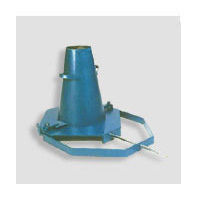
Concretes workability is evaluated using the slump test apparatus. Concretes consistency may be tested for easily, cheaply, and practically. It is used to assess how well newly mixed concrete will spread and flow into a specific shape. A base plate, a slump cone, a tamping rod, a gauge, and a ruler make up the slump test apparatus. The droop cone is a truncated cone with dimensions of 300 mm in height, 200 mm at its top, and 100 mm at its base.
Precise Measurement for Concrete QualityAchieving optimal workability of fresh concrete is made simple with this manual Slump Test Apparatus. Featuring high accuracy (1 mm) and a clear graduated display, the device allows reliable determination of slump values from 0 to 250 mm. This ensures concrete consistency in compliance with industry standards, supporting quality and safety on construction sites.
Durable and User-Friendly DesignOur apparatus is engineered from powder-coated mild steel, providing lasting strength and resistance to rust. Its portable, free-standing design and light weight (2-5 kg) make it easy to transport and utilize in any laboratory setting. With straightforward manual operation and low maintenance requirements, this equipment guarantees hassle-free concrete testing.
Applications in Civil Engineering and ConstructionThis Slump Test Apparatus is widely used in laboratories to assess the workability of freshly mixed concrete. Suitable for training, research, and on-site quality control, it is an indispensable tool for engineers and construction professionals seeking reliable slump measurements.
FAQ's of Slump Test Apparatus:
Q: How is the Slump Test Apparatus used in a laboratory setting?
A: The apparatus is used to assess the consistency and workability of fresh concrete. After filling the slump cone with concrete in three layers and compacting each with the included tamping rod, the cone is carefully lifted. The extent to which the concrete subsides is measured manually using the graduated rod, providing the slump value in millimeters.
Q: What materials constitute the Slump Test Apparatus, and how does this benefit users?
A: The main structure is made from powder-coated mild steel, ensuring high durability and resistance to corrosion. This construction allows for repeated use in varying environmental conditions, while also requiring minimal maintenance and ensuring long-term reliability.
Q: When should a slump test be performed during construction projects?
A: Slump tests are typically carried out whenever fresh concrete is mixed and before it is poured, to verify the consistency, workability, and water content. Routine testing helps prevent defective constructions and maintains quality control throughout the project lifecycle.
Q: Where can this apparatus be applied aside from laboratories?
A: While primarily used in laboratories, the Slump Test Apparatus is also suitable for on-site quality checks in construction environments. Its portable structure allows it to be easily transported for field testing, making it ideal for both research and practical construction work.
Q: What is the process for conducting a concrete slump test with this apparatus?
A: Concrete is placed into the cone in three layers, each compacted with the tamping rod. The cone is then lifted vertically, allowing the concrete to slump. The height difference is measured immediately using the manual graduated rod to determine the slump, which indicates workability.
Q: What are the main benefits of using this manual Slump Test Apparatus?
A: Key benefits include precise measurement (accurate to 1 mm), sturdy and easy-to-clean construction, portability, and suitability for repeated use. Its manual operation ensures simplicity and immediate results, supporting efficient and dependable concrete testing.

 Send Inquiry



 Send Inquiry


 Send Inquiry


