About Permeability Apparatus
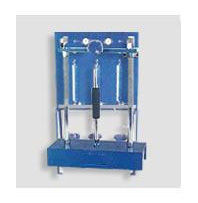
The permeability apparatus is a tool used to gauge a material's permeability. This device has two chambers: a sample chamber where the substance to be examined is inserted and a reference chamber with a substance that is known to be permeable. A valve connecting the sample and reference chambers enables the application of a known pressure to the sample chamber. The permeability of the sample material is then determined by measuring the pressure differential between the two chambers using permeability apparatus.
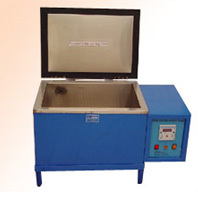
Robust Construction and DesignFabricated from mild steel with a resilient blue powder-coated finish, this apparatus offers durability and corrosion resistance. Its transparent front panel and non-corrosive specimen chamber allow clear observation of the permeability process in real time. The unit is uniquely designed for easy sample loading and disassembly, making both operation and maintenance straightforward.
Precise and Standardized TestingEngineered to comply with IS:2720 (Part 17) and ASTM D2434 standards, the apparatus delivers reliable, reproducible measurements using graduated glass manometer tubes. The system accommodates a single specimen at a time, with accurate control over water flow provided by manual valves, enabling detailed analysis of soil permeability within a range of 10^-7 to 10^-3 cm/sec.
Applications and AccessoriesIdeal for soil testing laboratories and educational institutions, this permeability apparatus enables hands-on demonstrations and research on soil water movement. The package includes complete accessories-pipes, connectors, measuring cylinders, water inlet/outlet valves, and a sample extractor-ensuring comprehensive, ready-to-use functionality for a range of testing scenarios.
FAQ's of Permeability Apparatus:
Q: How do you use the Permeability Apparatus for soil testing?
A: To use the apparatus, prepare a soil specimen and place it in the specimen holder. Connect the water tank and manometer tubes as illustrated in the manual. Regulate water flow using the drainage valve, observe the water movement through the sample, and measure the flow rate using the graduated tubes and cylinders. Data collected from the visual scale or graduated tubes allows calculation of the soil's permeability coefficient.
Q: What type of soils can be tested with this equipment?
A: This apparatus is designed for evaluating low to medium permeability soils, such as silts and fine sands. With a measuring range from approximately 10^-7 to 10^-3 cm/sec (subject to sample and measurement variations), it is suitable for laboratory-scale studies of soil permeability.
Q: When should the Permeability Apparatus be used in a laboratory setting?
A: Use this apparatus when you need to determine the permeability coefficient (k) of soil samples for geotechnical investigations, groundwater studies, or educational demonstrations. It is particularly valuable during site analysis phases or research projects where understanding water movement through soil is essential.
Q: Where is this apparatus typically installed or operated?
A: This equipment is designed for bench mounting in laboratory environments such as soil mechanics laboratories, universities, research institutes, and civil engineering facilities. Its compact footprint makes it suitable for use on standard laboratory benches.
Q: What process does the Permeability Apparatus use to measure soil permeability?
A: The apparatus measures soil permeability using a constant or falling head water flow method, depending on the soil's properties. Water is passed through the soil specimen under controlled conditions, and the flow rate is observed via graduated glass tubes and measuring cylinders. Permeability is then calculated according to standard test procedures.
Q: What are the benefits of using this soil permeability equipment?
A: Key benefits include compliance with international testing standards (IS:2720/ASTM D2434), reliable manual control for precision, corrosion-resistant components, ease of cleaning due to detachable parts, and suitability for repeated laboratory testing cycles. The apparatus also comes fully equipped for immediate use, promoting efficiency and accuracy.
Q: How is maintenance performed on the apparatus?
A: Maintenance is minimal and involves routine cleaning of the glass tubes, specimen chamber, and water tank after use. Components can be detached for thorough cleaning, reducing the risk of residue buildup and ensuring consistent, accurate performance over time.

 Send Inquiry



 Send Inquiry


 Send Inquiry


