About Microprocessor Friability Apparatus
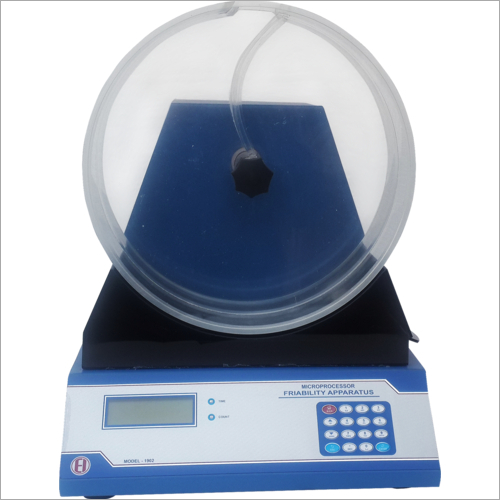
Microprocessor Friability Apparatus
FEATURES
- Complies with USP, IP specifications
- Microprocessor based, easy to use
- 20 x 4 line alphanumeric LCD display with backlit
- 16 Soft touch membrane type keys
- Independent programmable setups for Time & Count mode with storage
- Password-protected user access
- Facility to attach with weighing balance
- Rs232 Printer attachment facility
- Automatically calculates percentage friability
- Loading and unloading of tablets without removing drums
- Power Failure detection facility
- User friendly operation with menus & current status indicators.
-
Microprocessor Friability Apparatus, Model 1902 measures the tendency of a tablet to chip or breakdown to pieces when held under mechanical stresses. Instrument uses the latest microcontroller technology and advanced engineering techniques so as to give enhanced accuracy and reproducibility.
Precision Testing for Pharmaceutical QualityThe Microprocessor Friability Apparatus provides accurate and reliable assessment of tablet friability. With programmable parameters, it gives users precise control over test cycles, ensuring that pharmaceutical tablets meet required mechanical strength standards before distribution. Its robust design supports consistent laboratory performance.
User-Friendly OperationA clear, intelligent control panel ensures ease of use, even for those without extensive technical background. Its microprocessor-based system automates and records the test process, enabling laboratories to deliver consistent, traceable data. The apparatus is designed for minimal maintenance and long-term reliability.
FAQ's of Microprocessor Friability Apparatus:
Q: How does the Microprocessor Friability Apparatus operate during tablet testing?
A: The apparatus uses a rotating drum to subject tablets to standardized tumbling and impact, simulating conditions they may encounter during handling. The microprocessor system allows users to set, monitor, and record test parameters for accurate, repeatable results.
Q: What is the main application of this friability apparatus in a laboratory?
A: Its primary use is to determine the friability, or mechanical durability, of pharmaceutical tablets, helping laboratories verify that tablets can withstand handling, packaging, and transportation without crumbling or breaking.
Q: When should a friability test be performed in pharmaceutical production?
A: Friability testing is typically conducted during the quality control stage, both during and after the tablet manufacturing process, to ensure compliance with pharmacopeial standards and batch reliability.
Q: Where can this Microprocessor Friability Apparatus be installed?
A: Thanks to its compact dimensions (335 x 330 x 340 mm), it can fit easily on typical laboratory benches within pharmaceutical labs, research centers, and educational institutes focused on medicine or chemistry.
Q: What is the process for conducting a friability test using this apparatus?
A: First, tablets are weighed and loaded into the device's drum. The machine is then set according to specific test parameters. After rotation for a set period, tablets are removed, cleaned, and reweighed to determine weight loss, indicating friability.
Q: How does using a microprocessor-based system benefit laboratory testing?
A: Microprocessor control ensures precise test cycles and automatic data recording, minimizing human error and enhancing reproducibility of results. This contributes to greater confidence in the quality and consistency of tested pharmaceuticals.

 Send Inquiry



 Send Inquiry


 Send Inquiry


