About Digital Tablet Hardness Tester
Digital Tablet Hardness Tester
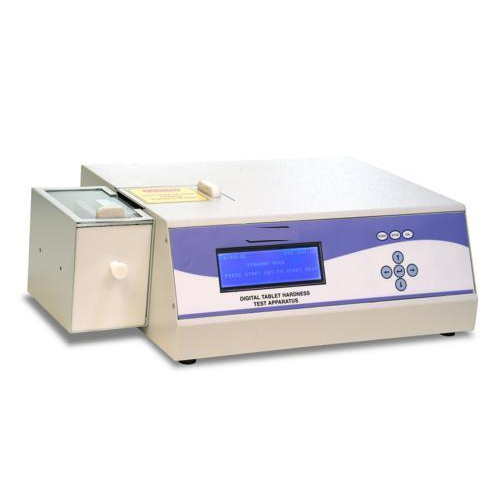
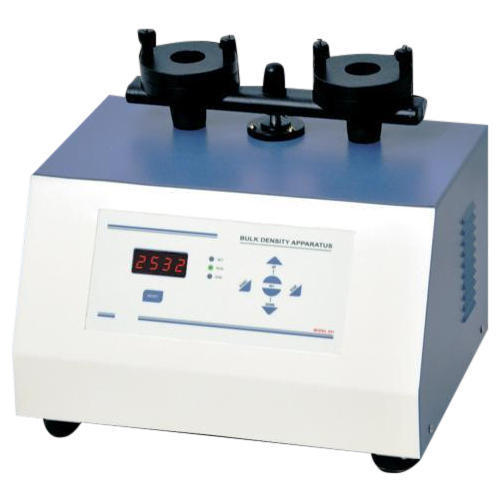
The Hardness tester is a compact mechanical strength testing machine, for the tablets. The instrument is equipped with Micro controller based circuitry, specially designed to measure hardness of the tablets.
The tablet which is to be tested is placed in between the jaw. As the test gets starts, plunger moves and crushes tablet. The tablet gets fractured and fracture load (hardness) is displayed on the two line informative LCD display. After the test, plunger returns to the preset position and waits for the next test tablet. The broken pieces of tablets are collected in a tray attached to the unit.
Fully Automatic OperationThis hardness tester offers automated measurement, minimizing manual error and increasing efficiency. Its automatic control mode allows for simple, consistent operation, making it an essential tool for laboratories prioritizing precision and streamlined workflows.
Robust and Reliable EngineeringEngineered for longevity, the tester operates on a stable 220/230 Volt, 60Hz power supply. Its high-quality build and 1-year warranty provide users with confidence in continuous operation and consistent test results, making it a reliable addition to any lab.
Ideal for Pharmaceutical ApplicationsDesigned specifically for the pharmaceutical industry, this device ensures that tablets meet quality standards before reaching the market. Its impact as a quality assurance tool helps manufacturers maintain compliance and product excellence.
FAQ's of Digital Tablet Hardness Tester:
Q: How does the automatic control mode improve testing efficiency on this hardness tester?
A: The automatic control mode streamlines the testing process by eliminating manual interventions, providing uniform results at a faster rate. This enhances workflow efficiency and reduces the risk of human error during tablet hardness measurement.
Q: What is the recommended process for using the Digital Tablet Hardness Tester?
A: To use the device, simply connect it to a 220/230 Volt, 60Hz power supply, place the tablet in the sample holder, and initiate the test using the control interface. The instrument automatically measures and displays the hardness result.
Q: When should the tester be calibrated or serviced for optimal accuracy?
A: It's advisable to calibrate the tester regularly, typically before each use or as per your facility's SOPs. Scheduled servicing, ideally once per year, helps maintain precision and ensures the instrument functions correctly throughout its warranty period.
Q: Where can this hardness tester be optimally installed?
A: The device is best installed in controlled laboratory environments such as pharmaceutical production or quality control labs that offer stable power (220/230V, 60Hz) and a clean workspace, ensuring accurate and repeatable results.
Q: What are the primary benefits of using this instrument in tablet manufacturing?
A: The primary benefits include improved testing consistency, reliable measurement accuracy, and enhanced quality control. Automated operation helps laboratories and manufacturers ensure compliance with industry standards and product safety requirements.
Q: How is this device suitable for non-computerized testing environments?
A: Since the tester is not computerized, it is ideal for settings that require direct and straightforward operation without complex digital interfaces, making training and day-to-day use simpler for operators.

 Send Inquiry



 Send Inquiry


 Send Inquiry


