About Lab Ball Mill
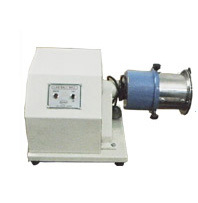
The mining, building, and chemical sectors all employ lab ball mill as a type of grinding machinery. High-speed balls are used to pulverise the material into a fine powder. Depending on the application, it can be either dry or wet. When it comes to the quick, repeatable pulverising, milling, or grinding of a wide range of materials, lab ball mill is an essential tool. Samples can be soft, elastic, or fibrous as well as hard or brittle, depending on the configuration and choice of mill.
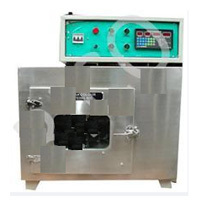
Engineered for Laboratory PrecisionSpecifically designed for laboratory-scale grinding and mixing, this Lab Ball Mill supports a capacity of 1 to 5 litres, perfect for diverse sample sizes. Its accurate rotary speed control (up to 100 rpm with 2 rpm precision) ensures consistent processing, while the removable jar and steatite balls allow for effective and homogeneous sample mixing.
Safe, Quiet, and Durable OperationOperating at noise levels below 60 dB, the Lab Ball Mill ensures a quiet working environment. Safety is prioritized through features such as overload protection, an enclosed structure, and a safety interlock. With its powder-coated mild steel build and anti-vibration rubber feet, durability and stability are guaranteed, making it suitable for continuous laboratory use.
FAQ's of Lab Ball Mill:
Q: How does the Lab Ball Mill ensure safety during operation?
A: The Lab Ball Mill is equipped with overload protection, an enclosed structure, and a safety interlock to prevent accidental operation, ensuring user safety throughout the grinding process.
Q: What materials can be used as the jar in this ball mill?
A: Depending on your laboratory requirements, the jar can be made from either chemical-resistant ceramic or robust stainless steel, both suitable for a variety of materials and samples.
Q: When should the grinding media (steatite balls) be replaced?
A: Replacement is recommended when the steatite balls show significant wear or reduced grinding efficiency. Regular inspection after frequent use will help maintain optimal performance.
Q: Where is the Lab Ball Mill typically used?
A: This equipment is mainly utilized in laboratories for research, quality control, and educational purposes, suitable for mixing and grinding small volumes of powder or granular samples.
Q: What is the maximum operating speed of the Lab Ball Mill?
A: The Lab Ball Mill can be operated at speeds up to 100 revolutions per minute, with precise speed adjustments possible using the rotary control and monitored via the analog display.
Q: How do the anti-vibration rubber feet benefit laboratory work?
A: The anti-vibration rubber feet minimize equipment movement and reduce noise during operation, providing a stable and quiet environment that enhances result accuracy.

 Send Inquiry



 Send Inquiry


 Send Inquiry


