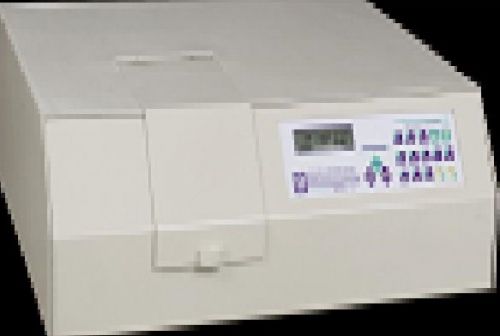
About Digital Spectrophotomete (Double Display)
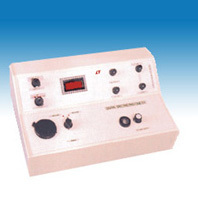
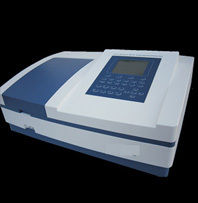
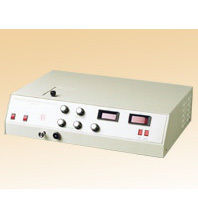
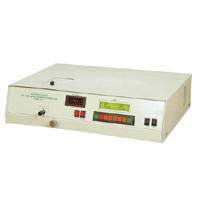
Digital spectrophotometer (double display) is a digital device that measures the intensity of light in relation to wavelength using a digital detector. It can readily be interfaced with computers for data storage and analysis and are more durable and less prone to wander. Our offering can also be multiplexed, which allows for the simultaneous measurement of light from various samples using a number of detectors. Digital spectrophotometer (double display) is used by physicists, biologists, and chemists to measure visible, near-infrared, and near-ultraviolet light.
Optimal Performance for Laboratory AnalysisDesigned for laboratory and industrial spectrophotometry, this digital spectrophotometer combines high-accuracy measurements with a user-friendly dual display interface. Its reliability stems from advanced optical components and an automatic operation method, enabling users to efficiently perform analysis across a wavelength range of 340-960 nm. Compact dimensions and lightweight construction facilitate convenient placement and handling in diverse workspaces.
Versatile Applications and User BenefitsThis instrument is tailored for a broad array of applications, from chemical and biochemical research to educational and industrial quality control. Its robust build and long lamp life (approx. 2000 hours) ensure longevity and reduced maintenance. The dual digital display streamlines data monitoring, while the device's high resolution and excellent stray light performance enhance measurement accuracy and reproducibility.
FAQ's of Digital Spectrophotomete (Double Display):
Q: How do I operate the Digital Spectrophotometer (Double Display)?
A: Operation is straightforward: insert a standard 10 mm cuvette containing your sample into the sample holder, select the desired wavelength between 340 nm and 960 nm, and initiate measurement using the automatic control. Results are shown clearly on the dual digital displays.
Q: What types of analyses can this spectrophotometer perform?
A: This device is suitable for both quantitative and qualitative spectrophotometric analyses, making it ideal for research, chemical analysis, and industrial quality control in laboratories. It measures transmittance (0-100%) and absorbance (0 - 1.99) with high accuracy.
Q: When should I replace the tungsten halogen lamp?
A: The tungsten halogen lamp typically lasts approximately 2000 hours. You should consider replacing it when you notice reduced light intensity or inconsistent measurement readings to maintain accuracy.
Q: Where is this spectrophotometer most effectively used?
A: This spectrophotometer is best suited for laboratory or industrial environments, especially in settings requiring high-accuracy measurement of single-cuvette samples. It operates optimally at temperatures between 10-40C and humidity under 80% RH (non-condensing).
Q: What is the process for ensuring optimal measurement accuracy?
A: To achieve optimal results, ensure that the sample cuvette is clean, select the appropriate wavelength, calibrate the instrument as per the manual, and avoid placing the device in areas with extreme temperature or humidity. Regular maintenance and prompt lamp replacement also help maintain accuracy.
Q: How does the dual digital display enhance usability?
A: The dual digital display allows simultaneous visualization of different measurement parameters, such as absorbance and transmittance, thereby improving data monitoring, minimizing user error, and expediting analysis workflow.
Q: What are the benefits of using this spectrophotometer in research and industrial applications?
A: It offers precise, reliable measurements, compact bench-top design, fast response time (<3 seconds), and manual as well as digital control-making it versatile for a wide scope of laboratory and industrial tasks, from routine testing to advanced research.

 Send Inquiry



 Send Inquiry


 Send Inquiry


