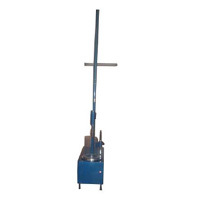
About Universal Testing Machine
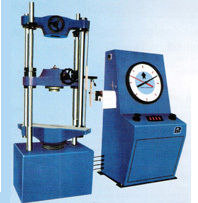
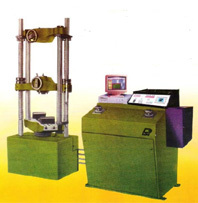
Universal testing machine is a device that can test a wide range of materials, components, and final goods mechanically. It is used to assess the mechanical properties of materials, including strength, hardness, elongation, and others. Our offering is an automated testing tool used to gauge a material's tensile, compressive, flexural, shear, and tear strengths. Universal testing machine is able to measure both the force that is exerted on a material and the deformation that results from that force.
Advanced Testing FlexibilityEngineered to support tensile, compression, bending, and shear tests, our Universal Testing Machine accommodates a diverse range of specimen shapes and materials. With quick self-centering wedge grips and a capacity up to 2000 kN, it effortlessly prepares you for rigorous industrial or research testing requirements.
User-Friendly Control and Data ManagementBenefit from streamlined operations with an intuitive push button or keypad control panel and digital/manual control modes. The digital output, printer connectivity, and optional RS232/USB interfaces ensure precise data recording and easy result documentation for efficient workflow management.
Robust Safety and Durability FeaturesAutomatic overload trip protection, heavy-duty construction, and corrosion-resistant powder coating contribute to the machine's longevity and operator safety. Double plunger hydraulic pumps, a 30-liter oil reservoir, and auto-calibration capabilities cater to intensive, high-frequency testing environments.
FAQ's of Universal Testing Machine:
Q: How does the automatic overload trip mechanism enhance safety during testing?
A: The automatic overload trip mechanism protects both the operator and the Universal Testing Machine by halting operation if the load limit is exceeded, thus preventing mechanical failure and assignments of potentially hazardous conditions during material testing.
Q: What types of materials and tests can this UTM accommodate?
A: This UTM can perform tensile, compression, bending, and shear tests on both metallic and non-metallic specimen types. It supports round specimens (10-40 mm) and flat specimens (up to 80 mm width), making it ideal for industrial and research applications on a broad array of materials.
Q: When is the Universal Testing Machine typically used?
A: It is commonly employed in laboratories and industrial settings where materials' mechanical properties need to be validated, such as during quality control inspections, product development, and research studies.
Q: Where can this equipment be installed, and does it require special conditions?
A: Designed for floor mounting, the UTM suits laboratories and industrial environments with stable flooring. It operates effectively in ambient conditions of 10C to 40C and humidity up to 85% RH, requiring a standard 220V AC power supply.
Q: What benefits does the digital/printer connectivity offer for test data handling?
A: Digital and printer connectivity allows automatic recording, transfer, and printout of test results, enhancing traceability, reliability, and ease of reporting. Optional RS232/USB interfaces further support integration with data management systems.
Q: How does the self-centering wedge grip arrangement aid the testing process?
A: Self-centering wedge grips ensure specimens are securely and accurately positioned, minimizing slippage or misalignment during testing. This contributes to consistent test results and protects both the specimen and the equipment.
Q: What standards does this Universal Testing Machine comply with?
A: The machine complies with international ASTM, IS, and BS standards, ensuring that test procedures and results meet widely recognized quality and accuracy benchmarks essential for global manufacturing and research needs.

 Send Inquiry



 Send Inquiry


 Send Inquiry


