About Sole Adhesion
Sole adhesion is the process of securing a sole to a shoe upper. Cementing, sewing, or glueing are the three ways most frequently used to accomplish this. The most popular technique is cementing, which entails attaching the sole to the upper with an adhesive. A more conventional method is to stitch the sole to the upper using a sewing machine. The more recent technique of sole adhesion is employing an adhesive to join the sole to the upper.
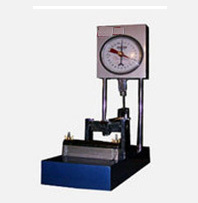
Reliable Testing for Footwear QualityOur Sole Adhesion Tester provides dependable and accurate results for assessing the bonding strength between the footwear sole and upper. Adhering to ISI and ISO standards, this equipment is specifically engineered for laboratory use, making it a valuable asset for manufacturers and suppliers committed to superior product quality and safety.
Durable, Portable, and User-Friendly DesignConstructed from powder-coated mild steel, the tester is built for longevity and continues performance. Its compact and bench-top form factor, along with easy transportability and low maintenance needs, ensures convenient operation across multiple laboratory environments. The adjustable clamps effortlessly accommodate different specimen sizes and types.
Precision Control and Instantaneous ResultsThis machine features manual operation with analog dial control, offering a measuring range of 0-20 kg and high accuracy of 0.1 kg. The adjustable clamps, test speed control, and safety features provide reliable measurements and safe usage, ensuring the tester is both versatile and efficient for varied footwear specimens.
FAQ's of Sole Adhesion:
Q: How do I use the Sole Adhesion Tester for footwear material testing?
A: To use the Sole Adhesion Tester, secure the shoe specimen (max size: 150 mm x 50 mm) in the adjustable clamps. Set the required test width and manually operate the unit to apply force. The analog dial instantly displays the adhesion strength up to 20 kgf, allowing you to evaluate the bond between the sole and upper.
Q: What specimens can be tested with this equipment, and what is its capacity?
A: The tester is designed for footwear sole-to-upper adhesion tests and accommodates one specimen at a time, with a maximum size of 150 mm in length, 50 mm in width, and up to 20 kgf test force. The adjustable clamps provide versatility for different shoe sizes and materials.
Q: When should I perform maintenance on the Sole Adhesion Tester?
A: This device is engineered for low maintenance. Regular checks for cleanliness, tightening of clamps, and inspection of safety locks are recommended. Refer to the user guide for periodic maintenance intervals to ensure sustained accuracy and reliable operation.
Q: Where can the Sole Adhesion Tester be installed for operation?
A: Thanks to its portable, bench-top design, the tester can be set up in any laboratory or footwear production environment with access to electric power and ambient temperature/humidity. Its compact size allows for easy relocation as required.
Q: What is the compliance standard for this device?
A: The Sole Adhesion Tester complies with recognized ISI and ISO testing standards, ensuring reliable and consistent test results that meet footwear industry requirements for quality assurance and export.
Q: What are the main benefits of using this tester in footwear laboratories?
A: Key benefits include high accuracy (0.1 kg), robust construction, simple manual operation, portability, low maintenance, and safety features such as locking mechanisms and a protective gauge cover. The tester is suitable for both routine and specialized bonding strength assessments.
Q: How is measurement accuracy controlled on this equipment?
A: Measurement accuracy is ensured by the analog dial gauge, which provides a resolution and accuracy of 0.1 kg. The manual operation coupled with adjustable test speed allows users to conduct precise and repeatable adhesion strength tests.

 Send Inquiry



 Send Inquiry


 Send Inquiry


