About Rubber Hardness Tester
Rubber hardness tester measures the hardness of rubber and other elastomers. It measures the depth to which a spring-loaded probe penetrates a sample in order to function. The material's hardness is then calculated by comparing the depth to a chart. Rubber's resistance to scuffing, abrasion, and distortion is measured by its durometer, which may be found out using the rubber hardness tester. Also, it is employed to gauge the shore hardness of substances like silicone and neoprene.
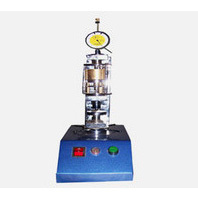
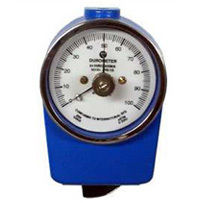
Reliable Hardness Testing for Rubber and ElastomersEngineered to deliver precise hardness measurements, this tester offers a compliance-driven solution for quality assurance in industrial and laboratory settings. Its hardened steel indenter, powder-coated finish, and stable benchtop design ensure long-term durability and reliable usage. The analog dial indicator is easy to read, allowing immediate and accurate Shore A hardness determination on standard-size rubber specimens.
User-Friendly Operation and VersatilityThe device is operated manually with a simple lever mechanism, allowing straightforward, automatic sample placement and testing. Its robust construction and portability make it suitable for various environments, including humid and temperature-variable spaces. Designed for both new users and experienced professionals, the tester provides consistent results for single specimens up to 6 mm thick and 10 mm in diameter.
FAQ's of Rubber Hardness Tester:
Q: How does the Rubber Hardness Tester measure the hardness of materials?
A: This tester measures hardness using a hardened steel indenter and a manual lever to press the specimen placed on a fixed anvil. The force applied is read immediately on an analog dial, displaying results in Shore A units according to IS 3400 and ASTM D2240 standards.
Q: What types of materials can be tested with this instrument?
A: The Rubber Hardness Tester is designed for testing the hardness of rubber, elastomers, and materials with similar physical properties. It can accommodate specimens up to approximately 6 mm thick and 10 mm in diameter.
Q: When and where should I use this hardness tester?
A: This device is ideal for industrial or laboratory environments where quality control, material verification, or compliance testing of rubber components is required. It operates effectively within a temperature range of 10C to 40C and up to 85% relative humidity.
Q: What is the process for conducting a hardness test with this equipment?
A: To conduct a test, position a standard-sized specimen on the fixed anvil, use the lever to lower the indenter onto the sample, and read the Shore A value directly from the analog dial. The process ensures immediate measurement with high accuracy and resolution.
Q: What benefits does the Rubber Hardness Tester provide over digital alternatives?
A: This analog tester offers reliable, immediate readings without requiring digital interface or software, ensuring ease of use and minimal maintenance. Its rugged construction and portability also make it suitable for a diverse range of operational settings.
Q: Is the equipment easy to maintain and durable?
A: Yes, the tester features a corrosion-resistant, powder-coated base and a polished finish for long-term durability. Its simple manual operation reduces mechanical complexity, resulting in low maintenance requirements.
Q: Can this tester be used for export and manufacturing quality checks?
A: Absolutely. This instrument is widely used by manufacturers, exporters, and suppliers in India for export-quality assurance and compliance with international standards, ensuring each product batch meets stringent hardness requirements.

 Send Inquiry



 Send Inquiry


 Send Inquiry


