About Brazilian Test Apparatus
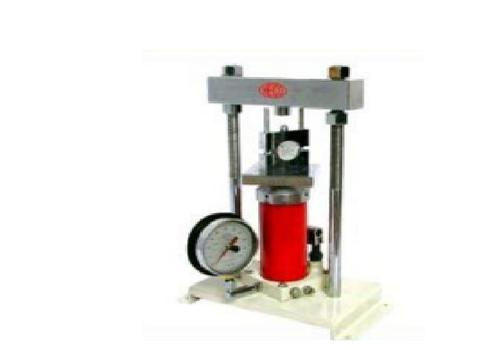
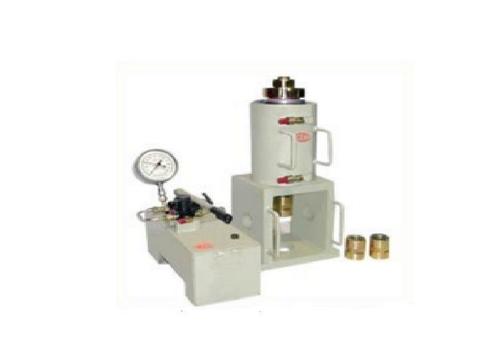
Concretes compressive strength can be evaluated using Brazilian test apparatus. It is made up of a plunger and a base plate attached to a cylindrical mould. The mould is filled with the concrete sample, and a load is applied to its top using the plunger. The concrete sample is loaded gradually and uniformly until it fails. The greatest load that the concrete sample can support is noted and utilised to determine the concretes compressive strength. Brazilian test apparatus is highly reliable.
Reliable Tensile Strength AssessmentEngineered specifically for determining the indirect tensile strength of concrete and rock, the Brazilian Test Apparatus provides fast, consistent, and accurate results. Its robust frame, precision alignment, and user-friendly interface ensure reliable data for construction material evaluation, helping labs meet international standards.
User-Friendly and Safe OperationThe equipment's manual operation mode, instant dial gauge display, and overload protection features prioritize user safety while ensuring seamless specimen placement and quick readouts. With an automatic hydraulic system and easily accessible service points, the apparatus minimizes downtime and error risks.
Low Maintenance, Rugged ConstructionDesigned for durability and minimal upkeep, the apparatus features a mild steel coated frame, hardened steel platens, and stainless steel components. The compact benchtop size and straightforward servicing access make it a practical choice for everyday laboratory applications.
FAQ's of Brazilian Test Apparatus:
Q: How is the Brazilian Test Apparatus used in a laboratory?
A: The apparatus is primarily employed for indirect tensile testing of concrete and rock samples. The specimen is aligned vertically within the precision platen slot, and using the hydraulic jack, a controlled load is applied until failure occurs. The analog gauge displays immediate readings, and all test results conform to ASTM C496 and IS: 5816 standards.
Q: What specimens can be tested using this apparatus?
A: The Brazilian Test Apparatus is designed for standard cylindrical specimens with a diameter of 150 mm and thickness of 75 mm. It supports single specimen tests with a loading capacity of up to 200 kN, making it suitable for concrete and rock materials.
Q: When should the Brazilian Test Apparatus be used?
A: It is ideal for use during the quality assessment of construction materials, research, or whenever indirect tensile strength needs to be measured according to international standards. This includes routine testing in material labs, factories, and research institutes.
Q: Where is the apparatus typically installed?
A: The equipment is intended for indoor laboratory use, specifically mounted on benchtops. Its compact dimensions and rugged build make it suitable for various laboratory environments in educational, industrial, or research facilities.
Q: What is the procedure for operating the apparatus?
A: Operators place the prepared specimen inside the slot, align it precisely, and begin a vertical load application through manual control. Hydraulic pressure is monitored via the analog gauge; test speed remains constant. Overload protection ensures safe operation throughout the procedure.
Q: What are the main benefits of this apparatus?
A: This apparatus offers several advantages: accurate, standard-compliant results, minimal maintenance needs, a rugged and durable design, safety features such as overload protection, and user-friendly controls that expedite each testing cycle with immediate result display.

 Send Inquiry



 Send Inquiry


 Send Inquiry


