About Binocular Polarizing Microscope
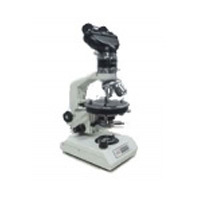
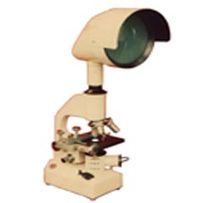
Binocular polarising microscope is optical microscopes that look at objects through polarised light. Light waves are cancelled out by two polarising filters crossed at 90 degrees to one another, one above the stage and one below, enabling study of minute details. This kind of microscope is frequently employed in geological and forensic applications. Binocular polarizing microscope is typically used in geology to study rocks and minerals, but it is also useful in the sciences of metallurgy, chemistry, biology, and physical medicine.
Superior Optical PerformanceWith wide field 10x eyepieces and achromatic objectives (4x, 10x, 40x), this microscope provides clear, high-precision imaging suitable for a range of scientific fields. The optical glass lenses and anti-fungus treatment ensure long-lasting optical clarity under various conditions.
Versatile and Convenient StageThe rotatable 360 graduated mechanical stage allows precise sample positioning. Combined with coaxial coarse and fine focusing, users can easily achieve the optimal focus for detailed observations, ensuring accurate polarizing studies in multiple disciplines.
Robust Build and Adaptable DesignConstructed with a durable metal housing and anti-slip rubber feet, the microscope promises stability and reliability. Its adjustable interpupillary distance (55-75 mm) and variable LED illumination make it comfortable and adaptable for extended use in laboratories and educational environments.
FAQ's of Binocular Polarizing Microscope:
Q: How does the rotatable 360 stage enhance the microscope's functionality?
A: The 360 rotatable stage allows users to precisely manipulate the orientation of specimens during observation, which is essential for accurate polarization studies and detailed structural analysis in geology, mineralogy, and petrography.
Q: What benefits do the wide field 10x eyepieces and achromatic polarizing objectives provide?
A: The wide field 10x eyepieces offer a broad viewing area, while the achromatic objectives (4x, 10x, 40x) deliver sharp, color-corrected images. Together, they support clear and detailed visualization necessary for professional research and educational purposes.
Q: When is it necessary to use the polarizer and analyzer in this microscope?
A: The polarizer and analyzer are used during polarization studies to analyze sample birefringence, identify minerals, or assess biological tissues. Engaging both components reveals structural and compositional details not visible under normal illumination.
Q: Where can this binocular polarizing microscope be effectively utilized?
A: This microscope is ideal for laboratories, research institutions, universities, geology departments, and medical research facilities in fields such as geology, mineralogy, petrography, biology, and education.
Q: What is the process for adjusting focus using this microscope?
A: Users can achieve sharp focus by first using the coarse adjustment knob for quick focusing, followed by the fine adjustment for precision. The coaxial design lets both adjustments work smoothly using the same control axis.
Q: How does the LED illumination with variable intensity improve usage?
A: Transmitted LED illumination with adjustable intensity provides consistent, energy-efficient lighting. Users can tailor brightness to their specimen's requirements, enhancing contrast and clarity for a more accurate observation.

 Send Inquiry



 Send Inquiry


 Send Inquiry


