About Vibrating Table
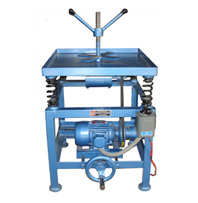
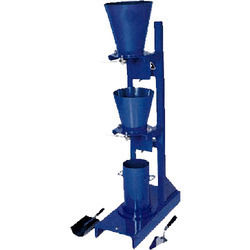
Vibrating table is a tool commonly used in industrial settings to shake or vibrate materials including dirt, cement, and concrete. A vibrating motor situated beneath the platform and a vibrating platform, or table, make up this tool. The vibrations produced by the motor enable the materials on the platform to move and mix, enabling more effective and precise material mixing. Vibrating table finds its application in mixing soil, concrete, cement, and other materials, as well as compacting soil and other materials.
Robust Iron and Steel BuildEngineered from high-quality iron and steel, the vibrating table offers exceptional strength and longevity. Its construction ensures maximum stability during operation, even under heavy loads, making it suitable for rigorous industrial environments.
Flexible Power and CapacityThis vibrating table operates on a 230-volt AC power supply and can handle weights ranging from 0 to 200 kilograms. Such a wide capacity makes it suitable for a diverse array of applications, including small-scale laboratory tests and large industrial processes.
Trusted Supplier from IndiaAs an exporter, manufacturer, and supplier based in India, the provider guarantees reliable after-sales support, timely deliveries, and high manufacturing standards. This ensures customers receive a product tailored to their industrial requirements.
FAQ's of Vibrating Table:
Q: How is the vibrating table powered and what is its voltage requirement?
A: The vibrating table operates using an AC power supply at 230 volts, making it compatible with standard industrial and laboratory electrical outlets.
Q: What materials are used in the construction of the vibrating table?
A: This model is constructed from durable iron and steel, ensuring robustness, stability, and longevity during frequent use.
Q: What is the weight handling capacity of the vibrating table?
A: It can support loads ranging from 0 up to 200 kilograms, accommodating varied production and testing needs.
Q: Where is this vibrating table manufactured and supplied from?
A: The vibrating table is manufactured, exported, and supplied from India, meeting high-quality standards for international markets.
Q: What processes benefit from using a vibrating table of this capacity?
A: Applications such as compacting concrete, settling granular materials, and laboratory sample preparation benefit from the table's reliable vibration and load-handling capacity.
Q: How does using a vibrating table enhance industrial processes?
A: The vibrating table ensures uniform compaction and air removal in poured materials, resulting in denser and more consistent end products, which is crucial for quality assurance.
Q: When is it advisable to use a vibrating table in operations?
A: It is recommended to use a vibrating table when uniform material settlement or compaction is essential, particularly in construction, testing labs, and manufacturing environments demanding precision.

 Send Inquiry



 Send Inquiry


 Send Inquiry


