About Sand Pouring Cylinder
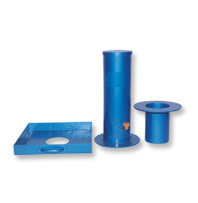
Our clients have recognized us as trustworthy manufacturer and supplier of Sand Pouring Cylinder. Fitted with conical funnel and shutter, these cylinders are used for place determination of the dry density of compact, fine and medium grained soils. Our Sand Pouring Cylinder is designed and developed under the guidance of professionals by using optimum quality materials, in compliance with international quality of standards and norms. We can also customize these cylinders on the parameters of dimension and capacity.
Features:
- Sturdy design
- Corrosion resistant
- Durable service life
High-Precision Soil Density MeasurementThe Sand Pouring Cylinder provides reliable and accurate field and laboratory measurements for soil density analysis. With engraved or printed calibration markings and a precise pouring valve, this apparatus ensures exact readings, helping professionals adhere to IS: 2720 and BS 1377 standards. Its consistent performance under standard laboratory conditions supports accurate data gathering for soil compaction and foundation assessments.
Durable, Portable, and Corrosion-ResistantManufactured with hardened mild steel and finished with protective powder coating or galvanization, this blue sand pouring cylinder resists corrosion and wear. Its lightweight build (2-3 kg) and portable, freestanding design make it effortless to transport and assemble on-site or in the laboratory, ensuring reliable operation in various environments.
FAQ's of Sand Pouring Cylinder:
Q: How is the Sand Pouring Cylinder used to determine in-situ soil density?
A: The Sand Pouring Cylinder is placed over the prepared test hole in the soil. After filling the calibrated cylinder with sand, sand is poured through the valve into the hole and surrounding area. The difference in sand volume before and after pouring, as indicated by the calibration markings, is then used to calculate the soil's in-situ density according to IS: 2720 (Part XXVIII).
Q: What are the main benefits of using a mild steel sand pouring cylinder with a powder coated or galvanized finish?
A: Using mild steel with powder coating or galvanization provides outstanding durability and resistance to corrosion. This extends the equipment's lifespan, ensures accuracy in harsh field conditions, and maintains the quality of measurements over time.
Q: When should this Sand Pouring Cylinder apparatus be used?
A: This apparatus should be used during field or laboratory soil density tests, particularly when measuring the compaction quality of soils for foundations, embankments, or road constructions. Its manual operation makes it suitable whenever electricity may be unavailable.
Q: Where can the Sand Pouring Cylinder be assembled and operated?
A: The Sand Pouring Cylinder is designed for both laboratory and on-site field use. Its portable and freestanding form allows easy setup wherever in-situ density testing is required, under standard laboratory temperature and humidity conditions.
Q: What process should be followed to ensure accurate measurements with this device?
A: Ensure the cylinder is properly calibrated, the test area is clean, and use the appropriate accessories (pouring cone, metal tray). Pour sand carefully through the leakproof valve and record the volume change using the engraved or printed calibrations for precise calculation.
Q: How many specimens can be tested at a time with this apparatus?
A: The standard cylinder is designed to test one soil specimen at a time, typically using a 10 cm diameter and 15 cm height sample, although other sizes are available as required.

 Send Inquiry



 Send Inquiry


 Send Inquiry


