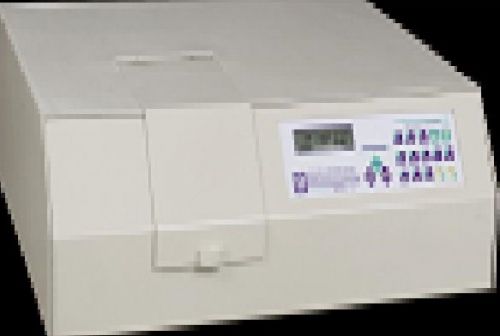
About Double Beam Spectrophotometer With Software
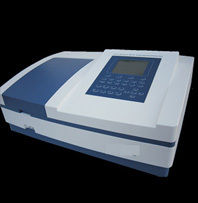
We are engaged in offering our clients a wide range of Double Beam Spectrophotometer. This spectrophotometer finds applications in various places like pharmaceuticals, bio technology and research institutions for identifying the substance and presence of exacting metal ions. The offered spectrophotometer is designed and fabricated by our vendor using finest grade raw material and latest technology keeping in mind the set industry quality standards. We offer this Double Beam Spectrophotometer in various specifications as per the needs of the clients.
Features:
-
Excellent performance
-
Compact design
-
Longer service life
-
Fine finish
Superior Accuracy and ConsistencyWith a wavelength accuracy of 0.3 nm and repeatability of 0.2 nm, the Double Beam Spectrophotometer guarantees highly consistent and precise measurements. The instrument's photometric repeatability at 0.2%T and low stray light level reduce variability and enhance dependability in critical laboratory analyses.
Integrated Software and Versatile AnalysisBuilt-in software functions enable advanced methods such as kinetics, quantitative analysis, multi-wavelength, and specialized DNA/protein assays. Data can be exported via printer or USB, supporting seamless workflows and integration with laboratory information systems. The automatic operation and PC control maximize efficiency.
Robust Design for Laboratory EnvironmentsDesigned for reliability in demanding lab conditions, the spectrophotometer features a stable light source with a typical 2000-hour lamp life, humidity and temperature tolerance (up to 80% RH and 40C), and durable bench-top construction. Its compact form (460 x 380 x 180 mm) is suitable for various lab settings, delivering performance across multiple scientific disciplines.
FAQ's of Double Beam Spectrophotometer With Software:
Q: How does the double beam configuration benefit analytical measurements?
A: The double beam design allows simultaneous measurement of the sample and reference, minimizing baseline drift and compensating for light source fluctuations. This leads to improved stability and accuracy, especially in long-duration analyses or when working with sensitive samples.
Q: What is the software used for, and which analytical functions does it offer?
A: The provided software enables a suite of analytical techniques, including kinetic studies, quantitative analysis, multi-wavelength measurements, and DNA/protein quantification. It facilitates automatic wavelength scanning, data management, and report generation, enhancing laboratory productivity and accuracy.
Q: When should I replace the lamp, and what is the typical lifespan?
A: The spectrophotometer uses deuterium and tungsten halogen lamps, with a typical combined operational lifespan of around 2000 hours under normal laboratory conditions. Replacement is advised once output weakens or stability decreases, typically after extended continuous use.
Q: Where is this equipment most commonly used?
A: This spectrophotometer is ideally suited for chemistry, pharmaceutical, biotechnology, and educational laboratories requiring precise absorbance and transmittance measurements. Its robust design and reliable operation support a range of routine and advanced analytical applications.
Q: What is the measurement range and resolution of the device?
A: The instrument measures within a wavelength range of 190-1100 nm, with resolution at 0.1 nm (display) and 1 nm (wavelength setting). It can measure transmittance from 0-200%T and absorbance from -0.3 to 3.0 A, suitable for diverse analytical requirements.
Q: How do I operate and control the spectrophotometer?
A: Operation is fully automatic and managed via PC software integration. Users load samples, configure test parameters through an intuitive interface, and monitor results on the large LCD display or export data via USB or RS232 connections. The software allows customized test procedures and multiple data output options.
Q: What advantages does this spectrophotometer offer over single beam models?
A: Compared to single beam models, this double beam spectrophotometer provides greater baseline stability, more accurate compensation for source fluctuations, and enhanced support for advanced testing via software. This reduces errors and delivers reliable, high-quality results in demanding laboratory environments.

 Send Inquiry



 Send Inquiry


 Send Inquiry


