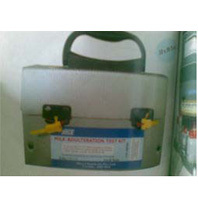
About Adultration Testing Kit (14 Test)
Adulteration testing kit is a set of tools and reagents used to detect the presence of adulterants in various food and beverage products. Adulterants are substances that are added to food products with the intention of increasing their quantity or improving their appearance, but may decrease their quality or pose a health risk to consumers.
Adulteration testing kits typically contain a combination of chemical reagents, test strips, and equipment such as beakers, pipettes, and centrifuges. The specific contents of the kit may vary depending on the manufacturer and intended use
Comprehensive and Versatile TestingThis adulteration testing kit supports qualitative testing for 14 of the most common food adulterants across a range of staple items such as milk, oil, ghee, spices, grains, and pulses. The set provides an accessible way to quickly screen for contaminants and ensure food safety during procurement, storage, or consumption.
Portability and User-FriendlinessDesigned with both field and laboratory use in mind, the kit features a compact and lightweight polymer carry case with a handle. The silent operation and easy-to-follow instructions allow for hassle-free, rapid testing, even outside traditional lab settings. This means you can maintain vigilance over food quality anywhere and anytime.
FAQ's of Adultration Testing Kit (14 Test):
Q: How do I use the Adulteration Testing Kit to check for food adulterants?
A: To use the kit, select the relevant test reagent and follow the instructions in the manual. Add food samples (such as milk, oil, or spices) and observe color changes or reactions in test tubes. The results indicate the presence or absence of adulterants.
Q: What types of food can be tested with this kit?
A: The kit is designed to test a variety of foods, including milk, edible oils, ghee, various spices, grains, pulses, and similar items for common adulterants.
Q: When and where should this kit be used for optimal results?
A: The kit is suitable for both fieldwork and laboratory environments. Use it during food procurement, storage assessment, or routine safety checks, especially where rapid results are essential.
Q: What is the process for storing the kit safely?
A: Store the kit in a cool, dry place to ensure the longevity of reagents. Always check manufacturer guidelines for specific storage recommendations to maintain the kit's effectiveness.
Q: What benefits does this kit provide to users?
A: The kit offers rapid, reliable screening for food adulterants, helping to protect consumer health and support quality control processes. Its portability allows for on-the-spot assessments without specialized lab equipment.
Q: Can the kit be reused and what is its shelf life?
A: Each test is intended for single use, though the kit contains 14 individual tests for different adulterants. Generally, its shelf life ranges from 12 to 24 months, depending on storage and manufacturer directions.

 Send Inquiry



 Send Inquiry


 Send Inquiry


